
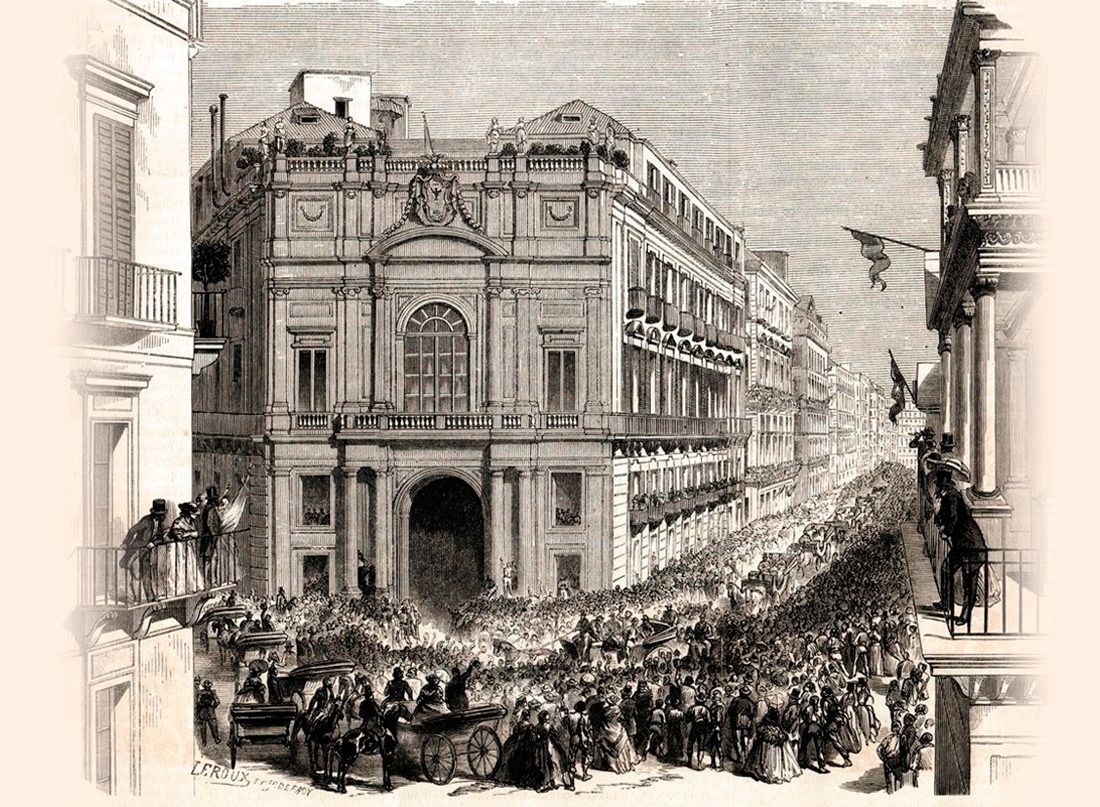
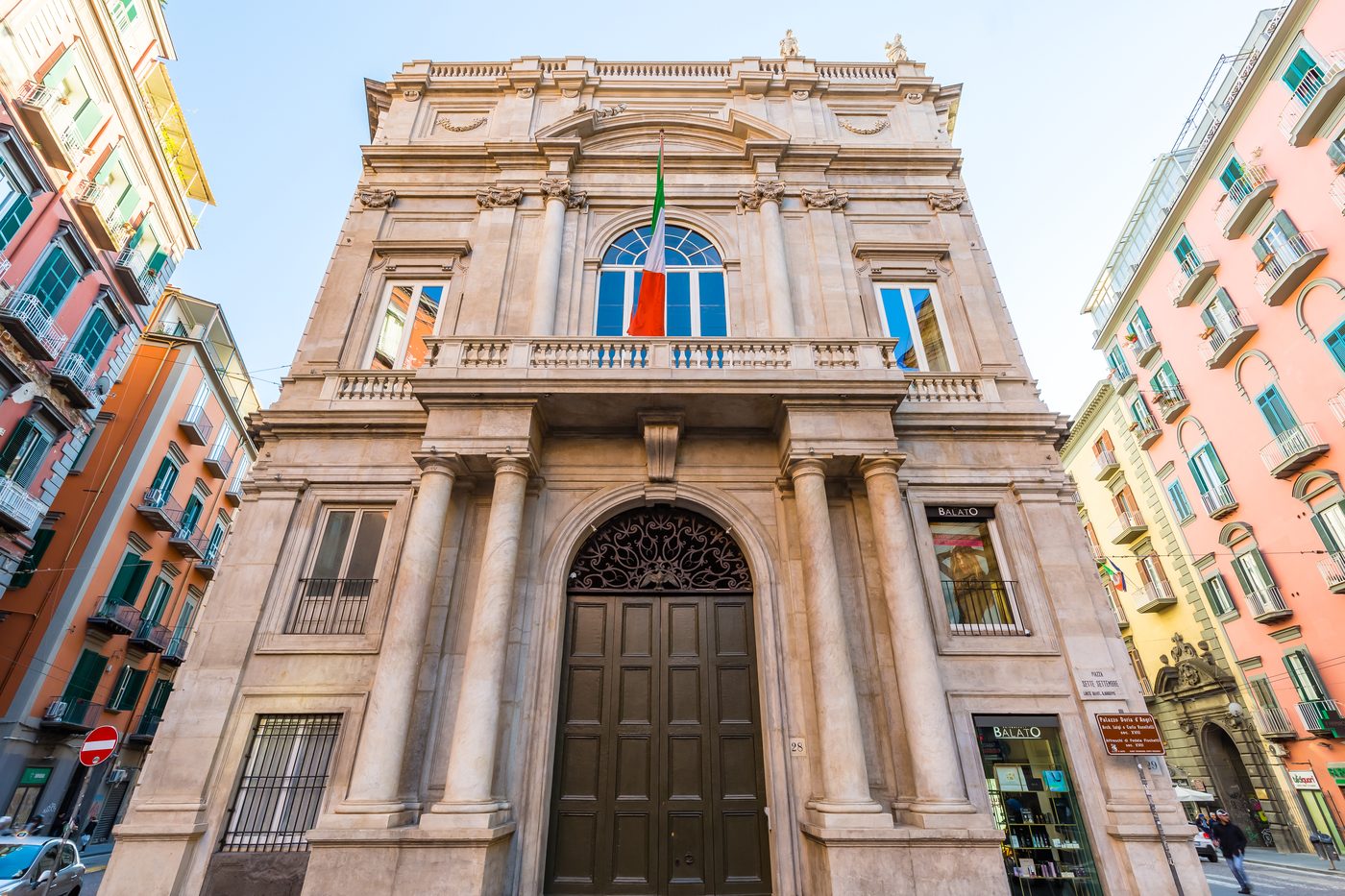
Palazzo Doria d'Angri is one of the most important historic buildings in Naples. Commissioned by Marcantonio Doria on a plot that contained two sixteenth-century houses — the reason for the distinctive feature of the two courtyards and two entrances of the Palace, one on Piazza Sette Settembre and the other along Spaccanapoli.
Due to bureaucratic delays, Doria never saw the start of his project, as he died in 1760.
His son Giovan Carlo carried on his father's project, entrusting the work to the architect Luigi Vanvitelli, who completed the design in 1769. Work proceeded slowly, also due to the death of Vanvitelli himself (1773), who left the work to his son Carlo.
Alongside the two Vanvitelli architects, Ferdinando Fuga directed the works in 1773, and Mario Gioffredo completed construction of the building between 1778 and 1780.
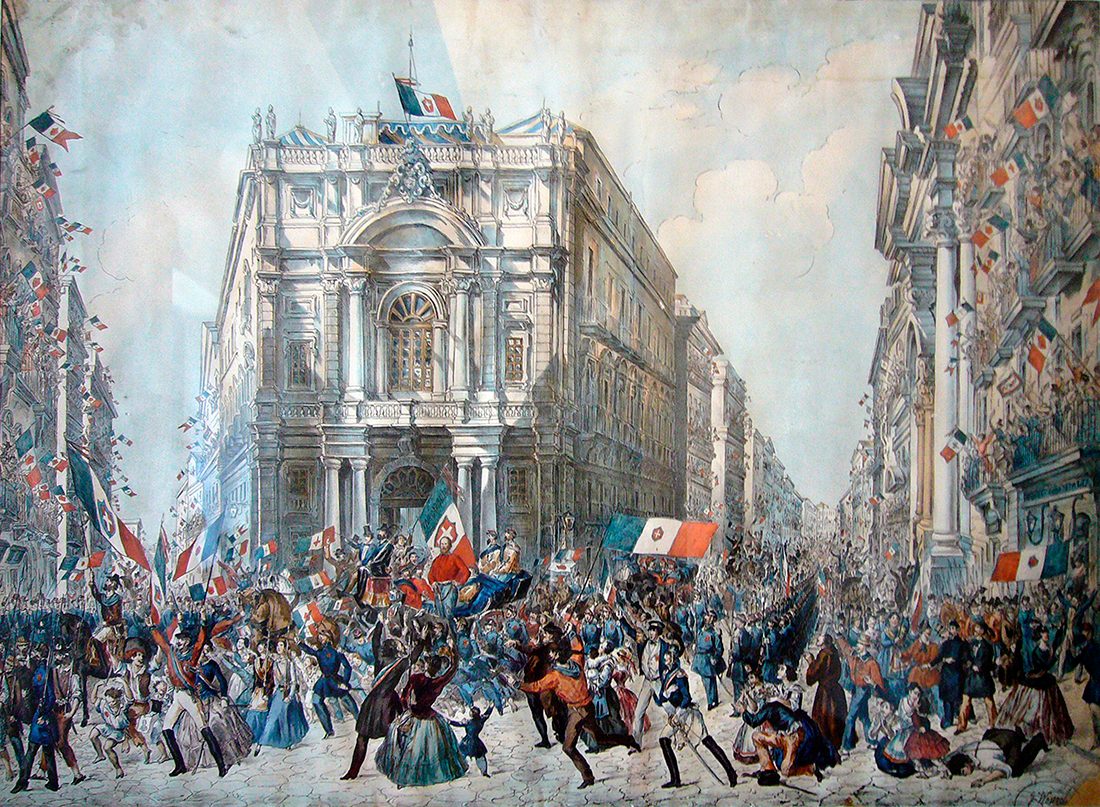
Historically, the palace is also remembered because in 1860 it hosted Garibaldi, who here — as recalled by the inscription on the façade at the corner with Via Toledo — announced the annexation of the Kingdom of the Two Sicilies to Italy.
In 1940 the remarkable collection of Marcantonio Doria kept in the palace — including ceramics, applied arts and paintings, among them works by Van Dyck, Rubens and Caravaggio's Martyrdom of Saint Ursula — was sold at auction; on this occasion Caravaggio's canvas was purchased by Banca Commerciale Italiana to display it in the historic Neapolitan seat of Palazzo Zevallos.
During the Second World War the complex suffered some damage, especially in the upper part of the main façade, losing six of the eight sculptures that adorned the upper cornice and the large noble coat of arms of the Doria family above the main-floor window. The decorations of the interior halls on the noble floor, however, entirely survived the bombings.